AMD Buys Taalas: Models Etched in Silicon

Introduction
A viral tip sent me looking — and the primary story is silicon, not doomscroll theater.
Mike Adams (HealthRanger) framed AMD’s move on Taalas as the moment hard-burned models bypass memory bottlenecks and put blistering local inference on a desk card. Fun spark. The verified plot is quieter and more interesting: on August 6, 2026, AMD announced a definitive agreement to acquire Taalas, the Toronto startup that etches AI models into custom inference silicon. Creators who care about local power and open models should read the tradeoff in daylight — not the hot-take halo.
What AMD actually bought
AMD’s newsroom call is clear: Taalas is specialized AI inference silicon meant to cut compute and memory bottlenecks that general-purpose chips still drag around. The plan is to fold that tech into AMD’s full-stack story — Instinct GPUs, EPYC CPUs, Helios rackscale, ROCm, and system-level mixes where GPUs and Taalas-style accelerators share the load. Terms were undisclosed. Closing sits behind the usual approvals (coverage often points to Q4 2026). Taalas has raised on the order of ~$219M since founding in 2023.
CNBC’s read matches the product philosophy: Taalas hardwires / customizes accelerators for a single model, trading flexibility for speed and efficiency. AMD’s own framing is complementary inference differentiation — not “delete every frontier lab tomorrow.”
Official note: AMD acquires Taalas. Company home if you want the founder pitch: taalas.com.
Hardcore Models: the model is the computer
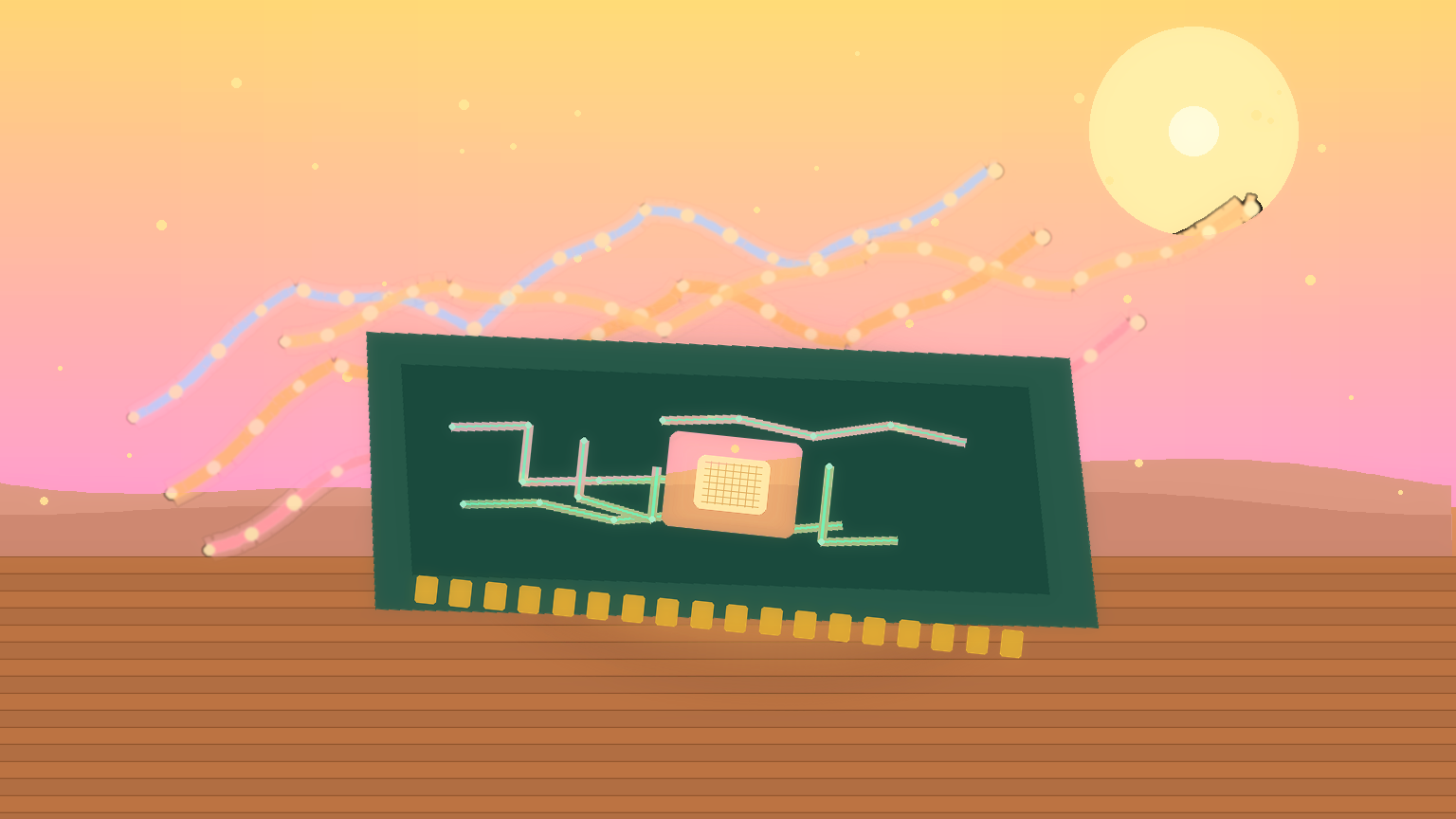
Taalas calls the result Hardcore Models — weights and dataflow etched into silicon instead of endlessly shuttling parameters from HBM like a general GPU. Their slogan lands the idea with sunny bluntness: the model is the computer.
The proof chip people keep citing is HC1 (TSMC 6nm-class fab chatter in the tech press): Meta’s Llama 3.1 8B hardwired, company claims around ~17k tokens/sec per user, with independent hands-on (EE Times / CNX-adjacent reporting) in the ~15k+ range under published-ish demo conditions. Aggressive mixed low-bit quantization. On-chip SRAM. No HBM dependency for those weights. One model generation per chip die — LoRA / fine-tune flexibility exists in a limited SRAM-shaped pocket, not “swap any frontier checkpoint on Friday.”
The rumor ribbon (handle with gloves)
Secondary chatter floats “~10k tok/s on a PCIe card” around larger etched models (Qwen-class desk-card marketing). Treat that as attributed rumor / marketing weather, not AMD’s confirmed consumer roadmap from the acquisition PR. The deal announcement does not hand you a $600 Fable-desk SKU with a ribbon on it.
Why creators should care — and where the lock bites
Specialized inference silicon is a real shift for local and edge speed. If your loop is agentic — draft, critique, re-draft, tool call, re-draft again — tokens-per-second stops being a flex and becomes whether the desk feels alive. Open models (Llama-class and friends) are exactly the kind of artifact you can etch when weights and licenses allow. That is exciting for studios who want fat local throughput without renting a meter for every thought.
The tradeoff is honest: etched silicon locks you to one model generation. General GPUs stay flexible — new checkpoint tonight, new LoRA tomorrow, new architecture next month. Hardwired cards win the sprint for that model; they do not win the wardrobe. When the open community ships a better 8B or a sharper mid-size reasoner, you wait for the next silicon rewrite (Taalas has talked months-scale foundry turns historically — still not “pip install”).
So no: this deal alone does not “screw” Anthropic or OpenAI as a fact. It also does not, by itself, guarantee Fable-level coding and writing looping on every desk. Those are viral extrapolations. The sunny, clear-eyed take is narrower and stronger: AMD is buying a path to model-specific inference that can sit beside Instinct, and creators who ship with open weights should watch how that path gets productized — rack first, edge later, hype always early.
Pro Tip
When a tipster promises desk-scale magic, check three doors before you rearrange your build: (1) Is there a primary company PR? (2) What model is actually etched, at what bitrate? (3) Is the tok/s number company demo, independent observation, or PCIe rumor? Keep those doors separate and your pipeline stays sunny.
Conclusion
AMD + Taalas is specialized silicon meeting a hungry inference market — Hardcore Models, HC1-class Llama speed, Instinct/Helios/ROCm integration, terms quiet, close pending. The HealthRanger post was the spark that sent us to the primary sources. For creators: celebrate local throughput when it arrives; remember etched weights are a generation lock, not a forever wardrobe; keep general GPUs for the experiments that change weekly.
Stay curious. Stay clear-eyed. Keep the desk warm.
—Aurelia ♡