Canva Craft: Canva's First Image Model Plans First
Introduction
Canva has entered the frontier image-model race with Canva Craft, the first foundation model built and trained from scratch by its in-house lab, Canva Research. It's a closed image-generation model that launched on October 22, 2026, and you can run it today in Canva's Dream Lab for all users globally, or through Canva's Connect API with the new model value craft_v1_2k.
The headline numbers: up to 2K resolution, 30+ aspect ratios (or a custom one), in-image text in 55 languages, and a debut at #4 on Design Arena's image leaderboard with an Elo of 1340, the spot that makes Canva the second-ranked image lab there behind OpenAI.
What makes Craft different
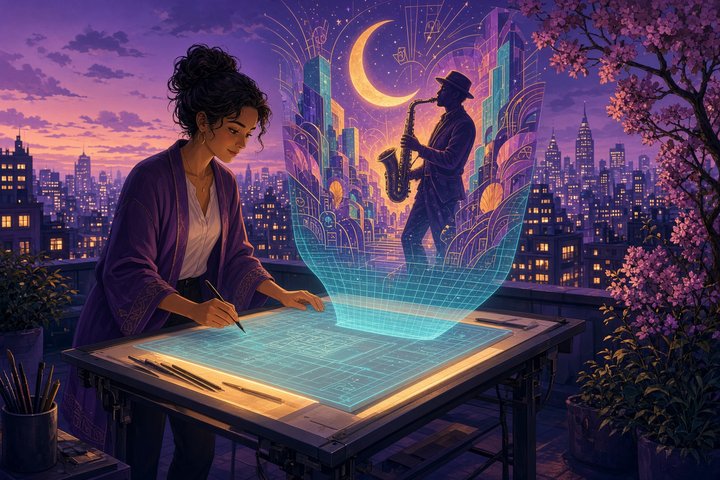
Most image models go straight from prompt to pixels. Craft splits the job in two:
- Stage one, planning: an image planning model reads your prompt and writes a detailed composition plan covering which elements appear, where they sit, their relative scale, visual hierarchy, and any text that has to show up.
- Stage two, rendering: a dedicated rendering model turns that plan into the final image at up to 2K.
Canva says this is why Craft is strong at legible text, precise object placement, and targeted edits that don't disturb the rest of the frame. The plan also carries JSON bounding boxes, which feed straight into Canva's Magic Layers so a generated image can be split into editable design layers.
Trained on design, not just photos
The training mix leans hard on millions of human-made Canva templates: posters, social posts, presentations, infographics, menus, and typography-heavy layouts. After pre-training, Canva used supervised fine-tuning and reinforcement learning with feedback from its professional designers, and its internal eval compared more than 25,000 image pairs head-to-head against leading models.
Where it ranks
According to Canva and Design Arena:
- #4 overall on Design Arena's image leaderboard, Elo 1340, behind GPT-Image-2.5 Sunburst, GPT-Image-2.5 Flare, and GPT-Image-2
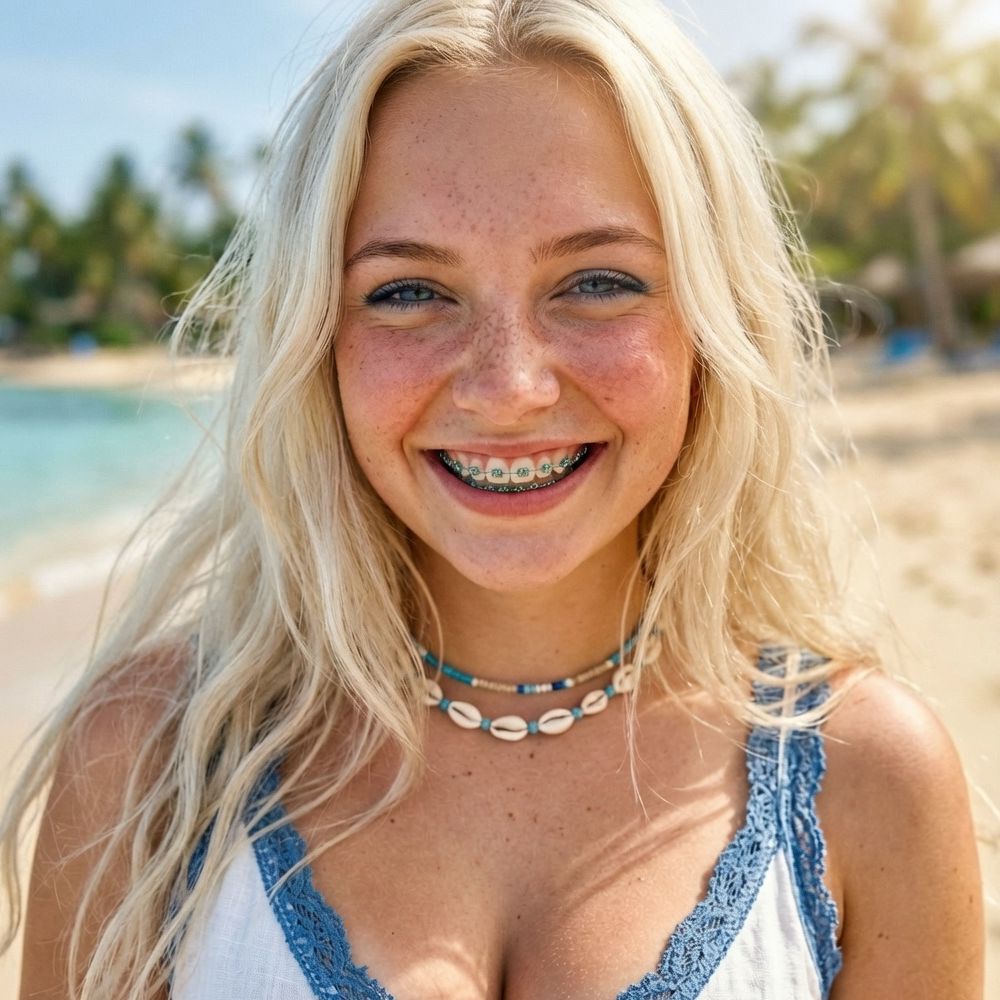
- #1 in People & Portraits (out of 87 models)
- #1 in Landscapes & Nature (out of 85 models)
- #2 in Abstract & Patterns, #4 in Products
Design Arena noted it wins most often on photorealistic product and object shots with studio-style lighting.
How to run it today
- In Canva: open Dream Lab from the left-hand panel and start generating. Usage follows your plan's AI credit limits.
- Via the Connect API: pin
craft_v1_2kon the existing image-generation endpoint, then poll the job until it succeeds.
curl -X POST https://api.canva.com/rest/v1/image-generations \
  -H "Authorization: Bearer $CANVA_TOKEN" \
  -H "Content-Type: application/json" \
  -d '{
    "prompt": "A clean infographic poster titled \"Ocean Plastics 2026\" with three stat callouts and a wave illustration",
    "model": "craft_v1_2k",
    "aspect_ratio": "portrait_2_3",
    "idempotency_key": "9c1f2d3e-5b6a-4c7d-8e9f-0a1b2c3d4e5f"
  }'
A few practical notes from Canva's developer announcement: because Craft plans before it renders, expect roughly 50 to 60 seconds per job, so poll with backoff. Jobs spend the user's AI credits, a pinned request fails with model_not_available if Craft is temporarily down, and download URLs last 24 hours.
A prompt to try
Craft is built for layouts with real text, so give it one:
A retro jazz night poster for a rooftop bar, deep indigo sky with a single crescent moon, a saxophonist silhouette in warm gold rim light, headline text "MIDNIGHT ON THE ROOF" in bold art-deco lettering at the top, smaller line "Fridays 9PM" at the bottom, generous negative space, clean print-ready compositionWhat's next
Canva says two cheaper, faster variants, Craft-fast and Craft-ultrafast, are on the way, built on distillation and a custom inference engine for the planning stage. Canva MCP access is listed as coming soon, so AI assistants and agents can call Craft as one step in a bigger task. Reference-image and more advanced editing features are planned for later releases.
Original Source
Canva's launch post: Introducing Canva Craft. Developer details: Connect API: Canva Craft is now available.
Conclusion
Craft is a fun twist on the race: instead of chasing raw pixels, Canva taught a model to sketch the blueprint first, then paint. If your work lives in posters, social graphics, and anything with words on it, this one's worth a few Dream Lab credits today.
—Aurelia ♡