ETRI AI Builds Maps and Fun QA

Introduction
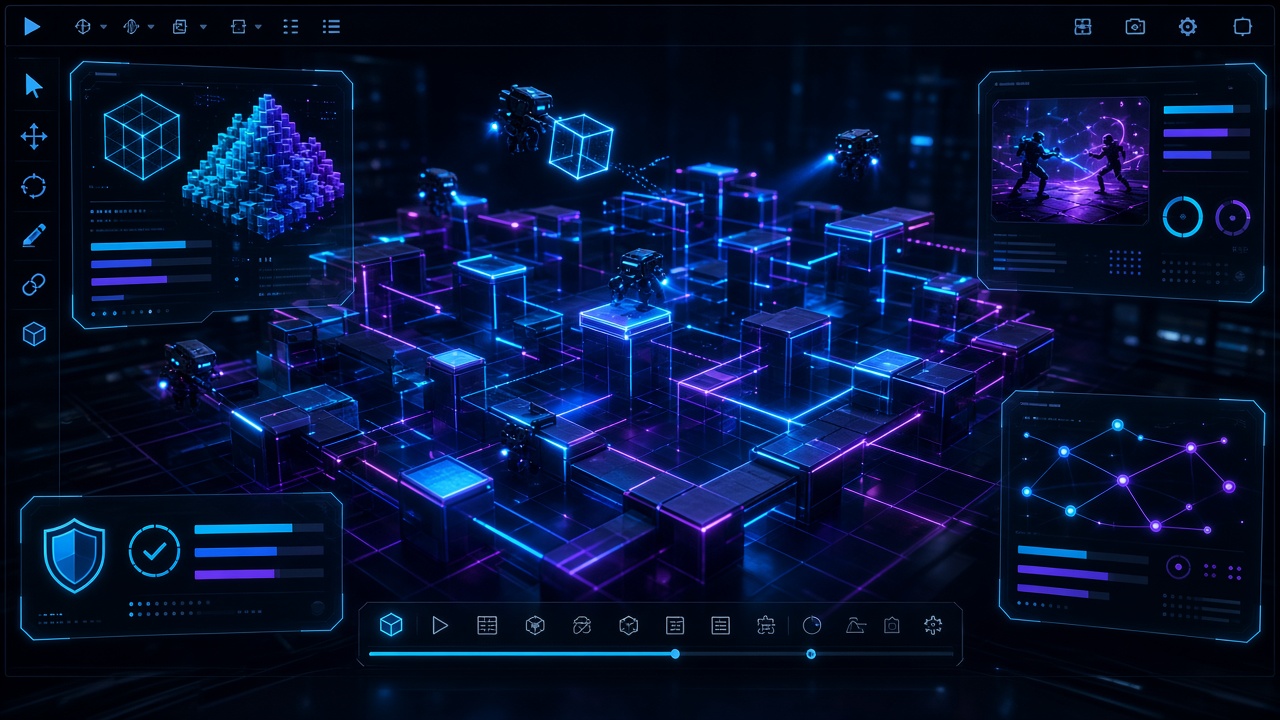
Most indie pipelines die in two places: content volume and QA headcount. Korea’s Electronics and Telecommunications Research Institute (ETRI) just put both on notice. On September 10, 2026 they detailed an AI-based game production and verification platform that writes maps with zero-data PCGRL, then throws specialized agents into the build to hunt bugs and score fun before humans burn a sprint.
If you ship Unity titles without a dedicated QA army, this is the stack to study — production AI up front, verification AI on the back end, one Unity-linked loop.
The Magic: Zero-Data PCGRL + Agent QA
ETRI splits the problem cleanly.
Production AI engine builds content without a mountain of labeled “correct” maps. Using reinforcement learning–based procedural content generation (PCGRL), the model invents layouts through trial and error while you dial constraints: maze path length, enemy count and placement, item mix, map size. Fewer scraped datasets means lower data cost and fewer copyright landmines.
Verification AI engine does not wait for a human playtest week. Multiple agents specialize — exploration, combat, mission completion — and run the game like noisy players. On top of that:
- Auto QA (LLM-powered) flags irregular failures that standard checklists miss.
- Fun QA turns play traces into a quantitative “how fun will this feel” read before launch.
The whole platform hooks into Unity, so generation and verification sit inside a real production engine instead of a research demo silo.
Pro Tip
Treat PCGRL constraints as your design language. Lock path length, enemy density, and item budget first — then let Fun QA rank variants. You are searching a design space, not praying a single generate-button hit is shippable.
Put the Loop on a Unity Prototype
- Wire the platform into your Unity project (ETRI’s stack is built for commercial Unity workflows).
- Define content constraints before generate — path length, enemy placement rules, item composition, target map size.
- Run the production AI to emit candidate maps/levels under those knobs.
- Spin verification agents with clear roles (explore / fight / complete objectives) across the candidates.
- Review Auto QA irregulars and Fun QA scores; promote winners, kill losers, regenerate the weak band.
- Ship what survives into your normal art/polish pass — Sublevel Games already launched 16 puzzle titles this way; Mgame is applying a transfer to a Yeolhyeolgangho spinoff and NUMI HUNTERS; Goblin Games shipped Mech Forge on the App Store.
PCGRL brief (example):
- Genre: puzzle-maze
- Path length: medium (avoid trivial shortcuts)
- Enemies: 3–5 ambush nodes, no spawn-camp clusters
- Items: 2 keys, 1 optional pickup, exit gated by both keys
- Map size: 32x32 cells
- Success metric: Fun QA ≥ target + Auto QA zero criticals
# Indie takeaway checklist (Unity session)
# 1) Set PCGRL knobs before generate
# 2) Batch 8–16 map variants
# 3) Run explore/combat/mission agents overnight
# 4) Promote only Fun QA winners with clean Auto QAETRI is also pushing free tech transfers and QA process support for small studios that cannot stand up their own AI infra — Korea University (multi-agent verification), Hongik University (Auto QA + Fun QA), and Mgame (live-ops response scenarios) co-built the pieces.
Conclusion
This is not “AI wrote a cute level once.” It is a closed loop: generate under constraints, verify with agents, score fun before launch, land in Unity. ETRI just handed indie and midsize teams a production pattern that already has App Store and global puzzle-catalog receipts. Steal the loop — constrain, generate, agent-playtest, promote — and stop burning sprints on maps that would have failed Fun QA on day one.
—Titus