Google Playground: Type a Game, Play It in the Browser

Introduction
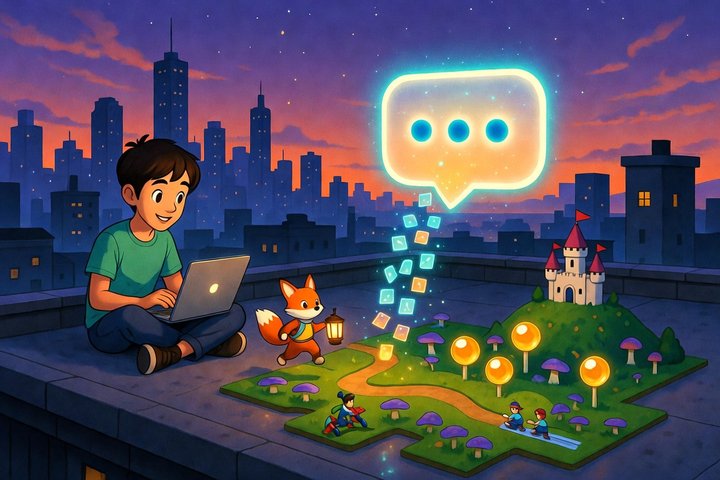
Google just put a game maker behind a chat box. Playground, an experimental Google Labs platform announced on 2026-10-07, lets you describe a game in plain text, test it right away, and keep steering it with more prompts until it plays the way you want. Under the hood it runs on Google's own models, Gemini, Nano Banana and Lyria, paired with what Google calls a custom harness tuned on its internally built games and evaluations. It's live today at playground.google for users in the U.S. who are 18 or older.
The same day, Google and Unity revealed Unity Spark, a heavier prompt-to-game tool that runs on the Unity runtime and will plug into Playground. Spark isn't open yet: it's in testing, with a closed beta coming later this year and a waitlist at unity.com/spark.
What shipped
PieceStatusWhere
Playground prompt-to-game builder (2D or 3D, single or multiplayer)
Live today, U.S. 18+
playground.google
Explore gallery, share links, ratings, leaderboards, Play Games profiles
Live
inside Playground
Unity Spark (Unity runtime, Asset Store art, pro-level mechanics)
Testing, closed beta later in 2026
unity.com/spark waitlist
Modality: text-to-playable-game generation, with characters, rules, physics and environments all driven by prompts. Open vs API: fully closed and hosted. There are no weights, no SDK and no public API, just the browser app. Pricing: creating games is free, and a Google One membership raises your weekly token limits, according to a Google spokesperson quoted by The Verge.
How a Playground game gets made
You start from a blank canvas, remix one of Google's starter prompts, or take the guided route. Per 9to5Google, the first choices are whether the game is 2D or 3D and whether it's single player or multiplayer. From there the loop is conversational. In Google's words, if you want to "tweak the physics, rewrite the rules, customize the characters, or overhaul the environment," you just ask.
Finished games run in the browser on a phone or laptop. You can keep a game private, send a share link, or publish it to the Playground Explore gallery. The gallery ranks games by player ratings and play activity. Select genres get in-game leaderboards and multiplayer, and a Play Games profile lets you claim a handle, like games and follow creators. Every published game goes through a safety screening against Google's Community Guidelines, and players can report games too.
Where Unity Spark fits
Playground is the casual end. Unity Spark is pitched as the next step up for creators who outgrow it, adding "robust, professional-level mechanics, high-fidelity 3D capabilities, and the flexibility of the Unity runtime," per Google's post. Games built in Spark will be shareable on Playground, and The Verge reports Spark also supports building a game with other people at the same time.
The art angle matters most for asset makers. Unity CEO Matthew Bromberg said Spark "connects directly to the Unity Asset Store, so you can build with thousands of high-quality, artist-created assets made by our community," as quoted by Game Developer. He also pushed back on one-shot generation: "This isn't about 'one-shotting.'" One naming trap: Spark has nothing to do with the older "Spark" no-code framework by Blink on the Unity Asset Store.
Try it today
If you're in the U.S. and 18+, sign in with a Google account at playground.google and start with a tight, testable brief rather than a whole genre. Then iterate one system at a time. A starter prompt you can paste:
Make a 2D top-down single-player game. I'm a lantern-carrying fox exploring a
dark mushroom forest at night. Collect 10 glowing spores while avoiding three
slow-moving shadow moths that chase me when I'm within 4 tiles. Lantern light
shrinks over time and refills when I grab a spore. Win at 10 spores, lose if the
light runs out or a moth touches me. Show a spore counter and a light meter.
Good follow-ups: "make the moths speed up after 5 spores," "add a second level with a river I have to cross on lily pads," or "turn this into a 2-player co-op where we share one light meter."
Outside the U.S., there's no official route in yet. Google says Playground launches "starting in the U.S." and creation access is tiered by Google One plan.
Caveats
Playground is labeled an early experiment, so expect limits and changes. Google hasn't published token quotas per tier, model versions, export options or ownership terms for the games you make, so read the terms before building anything you care about. Every game lives on Google's platform: there's no stated way to export a project to an engine. Unity Spark has no public build at all yet, only demo games and a waitlist, so treat its feature list as a preview.
Original Source
- Google announcement: https://blog.google/innovation-and-ai/technology/ai/playground-experimental-gaming-platform/
- Playground app: https://playground.google
- Unity Spark: https://unity.com/spark
- The Verge (pricing, models, Spark beta): https://www.theverge.com/tech/1006477/google-playground-unity-spark-ai
- Game Developer (Bromberg quotes): https://www.gamedeveloper.com/programming/unity-unveils-unity-spark-an-prompt-based-tool-for-google-s-ai-games-platform
Conclusion
Playground is the biggest platform yet to bet on prompt-driven game making as a consumer product: chat in, playable browser game out, with a gallery, leaderboards and multiplayer already attached. The real test for working devs is Unity Spark, because that's where Asset Store art and the Unity runtime meet the prompt box. Join the waitlist now, and if you're in the U.S., spend an evening seeing how far you can push one small game in Playground.
—Titus