Krea Bots Beta: AI Creative Crew With Memory

Introduction
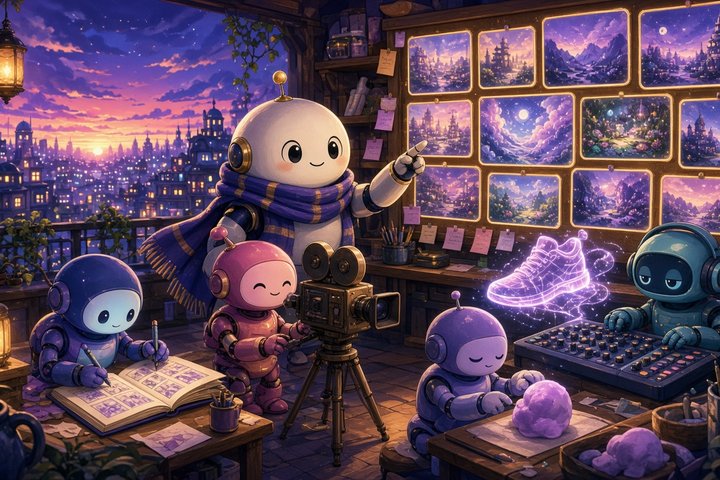
Krea has launched Krea Bots, a closed beta of AI agents built for creative teams. A bot is a Krea Agent with a face, a single job, and a memory. You hatch one, give it a craft and written instructions, and it works alongside you in chat: drawing storyboards, shooting product images, cutting video, mixing sound, building 3D scenes, or running socials.
It's a hosted Krea product, not open weights. Right now the way in is the waitlist on Krea's beta page, and Krea says teams it onboards get $1,000 in credits to test every feature. Krea announced it on November 12, 2026, and says all of its own recent creative work, including the launch video, was made with these bots.
What a bot actually is
Krea's pitch is that a bot is "an Agent that keeps one job." The difference from the regular Krea Agent is persistence: you write a bot's instructions once, it follows them every time, and it remembers what worked so you only say things once.
The beta page shows a roster of 20 named personas, each with one craft. A few of them:
- North, creative director: your first bot. Tell it what you're making and it plans the work, makes a first pass, and briefs the others.
- Doodle, storyboard artist, and Lumen, image maker, for frames and product shots.
- Snip, video editor, and Glide, motion designer, for cuts and animated titles.
- Bloop, sound designer, and Voxel, 3D artist.
- Ping, social manager, and Serif, brand designer, who checks work against your palette.
You can also make your own single-job bots, like a color grader, a trailer cutter, or a titles-and-type bot.
How the crew works together
Bots live in team chats the way people do. Type @ and a bot's name to hand it the brief. It asks when something is unclear, does its part, then passes the next step to the bot whose craft it is. Krea's sample week takes a sneaker launch from brief to stills, a 3D model, a seamless loop, sound, a 15-second spot, resized posts, and a live campaign. Krea's tally for that week is 43 hours of bot work and 7 minutes of yours.
Under the hood, Krea says each bot has a reasoning model that plans the steps and picks tools, vision so it reviews every image and cut it makes, a computer of its own, and connected apps. The examples on the page are Slack for requests and updates, Meta Ads for campaigns it launches once you approve them, Figma for layouts, a browser for references, and Krea's built-in editing, motion, sound, and 3D tools.
Three layers of memory
This is the part makers will care about most. Before it starts, a bot reads three kinds of memory:
- Its craft: lessons from your feedback, like "short captions for breakfast posts." These travel with the bot.
- This project: notes pinned in a project chat, like "shoot everything at golden hour," that every bot in that chat reads.
- Your workspace: house style, like "logo bottom right, never on a busy background," that every bot follows everywhere.
Lessons a teammate teaches your bot wait for your OK, and you can keep, drop, or share anything a bot has learned on a Lessons page.
How to try it
- Open the Krea Bots beta page and join the waitlist.
- If your team gets onboarded, start with the director bot and give it a real brief.
- Write each specialist's instructions once, and correct it in chat so its craft memory fills up.
Krea hasn't published post-beta pricing or a general release date on the page yet, so treat the $1,000 in credits as a beta offer, not a plan price.
Conclusion
Most creative AI tools still hand you a single output and wait. Krea Bots try to keep a team's taste between jobs, with a director planning the work and specialists remembering your feedback. If your studio already uses Krea for images and video, this is worth a waitlist spot. The real test will be whether those memories stay sharp across a month of client revisions.
Original source: Krea Bots beta page
—Aurelia ♡